A brief history of Canggu
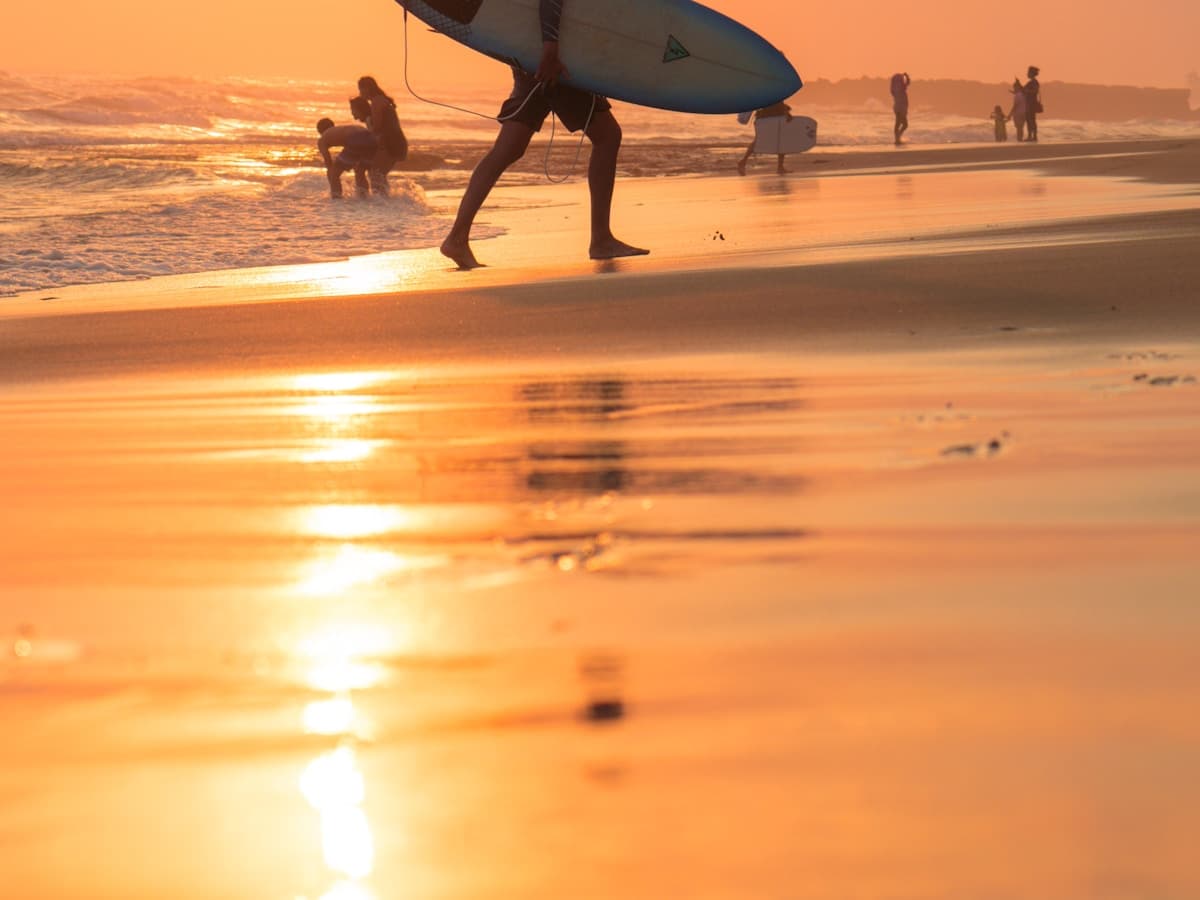
Canggu was rice paddies and fishing coast until surprisingly recently. In the 1990s the area north of Seminyak was known mainly for Pura Batu Bolong — a small sea temple on a rocky outcrop — and the black-sand beaches that local fishermen launched their outriggers from each morning. A few surfers found the breaks in the late 1990s and started renting rooms from farming families. The name Canggu barely appeared on tourist maps.
The shift came quietly in the mid-2000s when a handful of expats who had outgrown Seminyak's rising prices bought land on the back lanes around Batu Bolong and Berawa. They opened small guesthouses, then cafes, then surf schools. Old Man's bar opened on Batu Bolong Beach in the early 2010s and became the gravitational centre of a scene that was still mostly word-of-mouth. The rice fields that still surrounded these early businesses gave the neighbourhood its distinctive character — an open, low-rise landscape unlike the tight lanes of Seminyak or Kuta.
The digital-nomad wave hit Canggu hard after 2015 and accelerated through the pandemic years of 2020–2022, when remote workers from Europe, Australia and North America chose Bali as a base and Canggu as their neighbourhood of choice. Co-working spaces, co-living houses and fast-Wi-Fi cafes multiplied along every lane. The rice fields shrank as villas replaced them. Canggu became, briefly, the most-discussed digital-nomad destination on earth — a fact that delights some residents and frustrates others. The fishing boats still go out from Seseh Beach, 10 minutes north. The temple at Batu Bolong still holds ceremonies. But Canggu today is a different place from the farming coast of 2005, and it is still changing faster than almost anywhere else in Bali.
Best time to visit Canggu
Canggu follows Bali's dry-wet pattern, but as a surf destination the swell season matters as much as the weather.
Dry season — April to October
Offshore winds in the morning create clean surf conditions at Echo Beach and Batu Bolong. July–August is peak tourist season — cafes fill, accommodation rates rise 30–50%, and the lanes get congested by afternoon. Book 2 months ahead for anything good in this window.
Wet season — November to March
Onshore winds make surf messier, but the waves are bigger and emptier. Cafes stay busy year-round thanks to the nomad crowd. Prices drop and long-stay villa rates become much more negotiable.
Sweet spot
May–June: dry winds, consistent swell, half the July crowds. September also works well — offshore conditions resume after the August peak.
Local notes
- Canggu gets the same afternoon rain as the rest of Bali in wet season — usually a 1-2 hour downpour, then clear.
- Swell is most consistent May–September; December–February brings bigger, less predictable surf.
- Traffic on Jalan Raya Canggu can add 20–40 min to any trip during the 4–7 pm peak — plan around it.
Money & practical tips for Canggu
Currency & ATMs
IDR only. ATMs on Jalan Raya Canggu and near Old Man's are reliable — use BCA or Mandiri bank-branded machines. Avoid the standalone ATMs that sometimes add a second foreign fee on top of your bank's charge.
Getting around
Scooter is king in Canggu — the lanes between beaches and cafes are too narrow and slow for cars at peak times. Rent for USD 5–8 per day. Grab and Gojek work but surge heavily in the 4–7 pm window. Walking between Batu Bolong and Echo Beach takes about 20 minutes along the beach path.
Co-working & SIM
Day passes at co-working spaces run USD 8–15 and include fast Wi-Fi and a desk. For mobile data, Telkomsel has the strongest signal in Canggu. Buy a tourist SIM at the airport or at any phone stall on Jalan Raya (~IDR 150–250k for 20–30 GB).
Where to stay in Canggu
Canggu's accommodation clusters around its beaches and back lanes. The neighbourhood you pick determines whether you walk to the surf, the cafes or the rice fields — distances are short but traffic can make a 2 km trip take 30 minutes.
Budget
Under USD 35 / nightJalan Batu Mejan
The back lane parallel to Batu Bolong Beach — surf guesthouses and small homestays, 5-min walk to Old Man's and the beach, significantly cheaper than the beachfront.
Pererenan village
10 min north of central Canggu — rice-field guesthouses and family homestays at the lowest rates in the area, scooter needed for beach and cafes.
Mid-range
USD 50–150 / nightBatu Bolong back lanes
Private-pool villas on quiet lanes within 10 min walk of the beach, Old Man's and the best cafes — the sweet spot for most first-time Canggu visitors.
Berawa
Slightly removed from the Batu Bolong crowd — good villa value, walking distance to Finns Beach Club, and quieter streets than the central Canggu lanes.
Luxury
USD 200+ / nightEcho Beach villas
The clifftop lane above Echo Beach has several high-end private villas with ocean views — walk to the surf and La Brisa, removed from the cafe-strip congestion.
Tibubeneng
North of Canggu proper — large private-pool estates surrounded by the last of the rice fields, absolute quiet, 15-min scooter to the beach and town.
Canggu FAQ
?Is Canggu good for beginner surfers?
Yes — Batu Bolong Beach has a mellow beach break well suited to beginners, with several surf schools offering 2-hour lessons for around USD 25. Echo Beach is better left to intermediates and above. Most schools will assess your level and send you to the right break.
?How far is Canggu from Seminyak?
About 8 km by road, but traffic on the single main road can make it 30–45 minutes by car in the afternoon. By scooter on the back lanes it's a 15-minute ride. Many travellers split a trip between the two areas — 2–3 nights each.
?Is Canggu good for digital nomads?
It's arguably the most developed digital-nomad destination in Southeast Asia. Fast Wi-Fi cafes, co-working spaces, co-living houses, and a large expat community mean infrastructure and social life are both well catered for. High season (July–August) can feel crowded; the shoulder months are much more workable.
?How do I get from Canggu to the airport?
Grab or Gojek takes 35–50 minutes depending on traffic and costs USD 10–18. A pre-booked private transfer is USD 20–30. Leave at least 90 minutes before your flight if travelling during the afternoon rush.