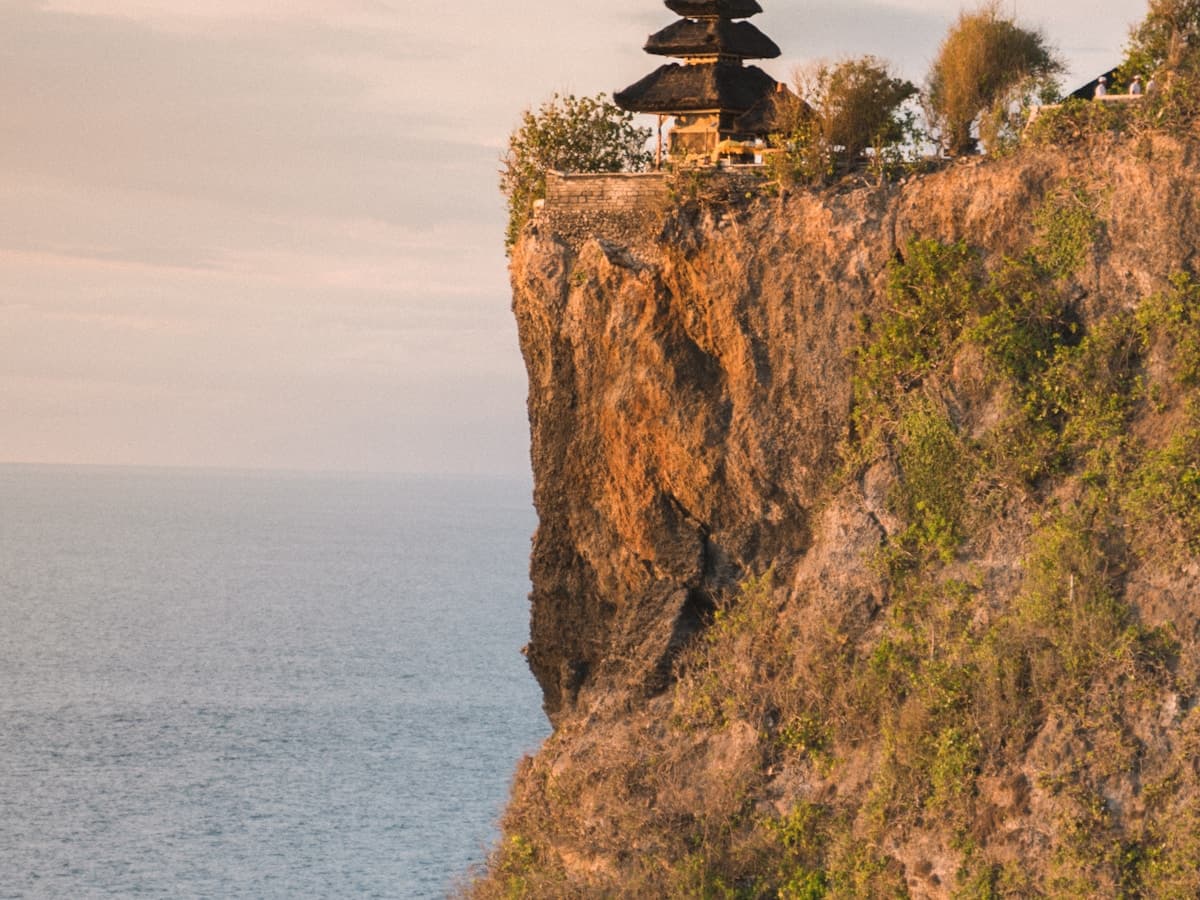
A brief history of Uluwatu
The Bukit Peninsula — the limestone plateau that Uluwatu sits on — was for most of Balinese history considered a marginal, difficult place. The coral rock holds little water, the soil is thin, and the cliffs that make the coastline so dramatic made fishing from the shore nearly impossible. The peninsula was sparsely settled, used mainly for grazing cattle and for the network of sea temples that Balinese Hinduism planted at the island's directional extremities. Pura Luhur Uluwatu, built in the 10th century and expanded by the priest Dang Hyang Nirartha in the 16th, was the most important of these — one of the Sad Kahyangan Jagat, the six temples believed to protect Bali from spiritual harm. For centuries, pilgrims made the journey south specifically to pray there. Almost no one else came.
Surfers changed that. In the early 1970s, Australian and American surfers following the Indian Ocean swell discovered that the limestone reefs at the base of the Bukit cliffs produced some of the longest, most consistent left-handers on earth. Word spread through surf magazines and early films — Morning of the Earth (1972) showed Uluwatu to a global audience. By the late 1970s a loose community of surfers was camping on the clifftops, accessing the break through the natural cave at Suluban. The local families who had farmed the plateau for generations found themselves renting out rooms, cooking meals and renting boards to a steady trickle of wave-hunters who wanted nothing from the peninsula except its reefs.
The transformation from surf camp to destination accelerated in the 2000s and 2010s. Cliffside warungs became restaurants. Guesthouses grew into boutique hotels. Single Fin opened above the Uluwatu break and invented the format — bar plus surf-view terrace — that a dozen venues now replicate. Omnia arrived in 2016 and proved the Bukit could support international luxury. The Kecak dance, which had been staged at Pura Luhur Uluwatu since the 1970s, became one of the most-photographed cultural events in Bali. Today the Bukit Peninsula is one of south Bali's most distinct and sought-after destinations — but the temple still holds ceremonies that have nothing to do with tourism, the surfers still paddle out through the cave before dawn, and the cattle still graze the flat plateau above the cliffs.
Best time to visit Uluwatu
Uluwatu is Bali's driest and windiest corner — the Bukit Peninsula gets less rain than the north or interior, and the offshore morning winds in dry season are what make the surf so clean.
Dry season — April to October
Offshore winds from the southeast keep the surf clean every morning. May–June and September are the sweet spots — consistent swell, shorter crowds than July–August, and the cliff sunsets are at their clearest. July–August peak: accommodation books out weeks ahead, Single Fin Sunday Sessions are packed.
Wet season — November to March
Onshore winds make surf messy in the mornings, but the waves are bigger and the cliffs are less crowded. Uluwatu gets far less rain than Ubud or Canggu — even in wet season, many days are dry and warm. Prices drop 25–40%.
Sweet spot
May–early June and September–October: offshore conditions, consistent swell, no peak-season pricing or crowds.
Local notes
- Uluwatu is hotter and drier than the rest of Bali — carry water, especially on the cliff walks.
- The cave access to Suluban Beach closes at high tide — check a tide chart before planning a beach visit.
- Monkeys at Pura Luhur Uluwatu are bold thieves; secure sunglasses, hats and bags before entering the temple grounds.
Money & practical tips for Uluwatu
Getting there & getting around
Uluwatu has no main street grid — it's a series of cliff-edge lanes connected by one road. A scooter (USD 5–8/day) is almost essential; Grab and Gojek work but coverage is patchy at the southern tip. From the airport allow 45–60 min by car depending on traffic.
Cash & ATMs
ATMs are sparse south of Jimbaran — there are a couple near Padang Padang and one at the Uluwatu temple car park, but they run out on busy weekends. Withdraw enough cash in Kuta or Jimbaran before heading south.
Cliff safety
The limestone cliff edges are unfenced in many places and crumble without warning. Stay on marked paths, especially after dark. Several serious accidents have happened at viewpoints — treat every edge as unstable.
Where to stay in Uluwatu
Uluwatu's accommodation is spread across cliff-edge lanes and hilltop villages rather than a single strip — where you stay determines which beaches and breaks you can reach on foot. The distances are short but the roads are winding; a scooter makes every neighbourhood workable.
Budget
Under USD 40 / nightJalan Labuansait (top of the cliff)
The main surf-stay lane above Single Fin — family guesthouses and small homestays at the lowest rates in Uluwatu, 5-min walk down to the breaks.
Bingin & Padang Padang villages
Tiny guesthouses on the cliff roads above the beaches — basic but well-located, with some of the most jaw-dropping views in Bali available from budget rooms.
Mid-range
USD 60–200 / nightBingin cliff face
Boutique guesthouses and small villas built into the cliff — some have private plunge pools facing the ocean; book ahead as there are only a handful and they fill fast in high season.
Uluwatu / Pecatu plateau
The hilltop above the cliff villages — private-pool villas with rice-field or ocean views at mid-range prices, scooter distance to every break and the temple.
Luxury
USD 300+ / nightUluwatu clifftop resorts (Bulgari, Alila)
The peninsula's flagship properties sit right on the cliff edge with infinity pools above the ocean — among the most dramatic resort settings in Southeast Asia.
Ungasan / Pecatu Indah
The plateau's resort belt — several large luxury properties with full facilities, a short drive to the surf beaches and the temple, quieter than the cliff-edge lanes.
Uluwatu FAQ
?Is Uluwatu good for non-surfers?
Yes — the temple, Kecak dance, cliffside bars, beach clubs (Sundays at Single Fin, Omnia) and beaches like Bingin and Padang Padang are all worth the trip. But the area is spread out and scooter-dependent, so non-surfers who prefer walking everywhere may find it less convenient than Seminyak or Canggu.
?How do I watch the Kecak dance at Uluwatu?
Performances run nightly at 6 pm on the clifftop stage inside Pura Luhur Uluwatu. Buy tickets at the temple gate (IDR 150k). Arrive 30 minutes early for a front-row spot; the stage faces west so the setting sun is behind the performers. Sarong and sash required — rented at the gate.
?Which Uluwatu beach is best for swimming?
Padang Padang and Bingin are the most protected, with calmer water at low-mid tide. Balangan is wider with a gentler slope. Avoid swimming directly at the Uluwatu surf break — the reef and current are serious hazards. Always check conditions with locals before entering the water.
?How far is Uluwatu from Seminyak?
About 25 km by road, 40–55 minutes depending on traffic. Many travellers base in Seminyak and do Uluwatu as a sunset day trip — drive down in the afternoon, temple and Kecak at 6 pm, dinner at a clifftop restaurant, back by 9 pm.