A brief history of Sanur
Sanur has the longest continuous history of Western engagement with Bali of any beach on the island. The first European to settle here was not a tourist but a painter: the Belgian Adrien-Jean Le Mayeur de Merprès arrived in 1932, built a compound on the beach, married a celebrated Legong dancer named Ni Pollok, and spent the next 26 years painting the light and ceremonies of Balinese life. His beachfront home — now the Museum Le Mayeur — was one of the first places in Bali that Western visitors could see what the island looked like through a resident's eyes rather than a traveller's. Other artists and writers followed, drawn by the same combination of affordable living, ceremonial richness and extraordinary landscape.
Before Le Mayeur, Sanur had its own fame as the site of one of the most consequential moments in Balinese history. In September 1906 the Dutch colonial army landed on Sanur beach to begin the final subjugation of south Bali. The Balinese kingdoms, knowing they could not defeat Dutch firepower, chose puputan — a ritual fight to the death rather than surrender. The king of Badung and hundreds of his court marched in white cremation dress toward the Dutch rifles. The colonial troops fired; almost no one survived. The event was witnessed by foreign correspondents and shocked international opinion. A small stone marker near the beach still commemorates the puputan. For Balinese, Sanur is not simply a pleasant beach — it is where their sovereignty ended.
Modern Sanur developed differently from Kuta. The first hotel — the Sindhu Beach Hotel — opened in the early 1960s, and for two decades Sanur was Bali's premier tourist address: the beach where dignitaries stayed and where the handful of international visitors who could reach Bali at all were housed. When Kuta's backpacker boom arrived in the 1970s and Nusa Dua's resort zone was built in the 1980s, Sanur positioned itself in between — neither budget nor gated resort, but a quiet, quality middle ground. That positioning has held. Today Sanur's long-stay expat community, its gentle beach and its role as the main gateway to the Nusa islands give it a stability and identity that have proven remarkably resistant to the waves of development that transformed the rest of south Bali.
Best time to visit Sanur
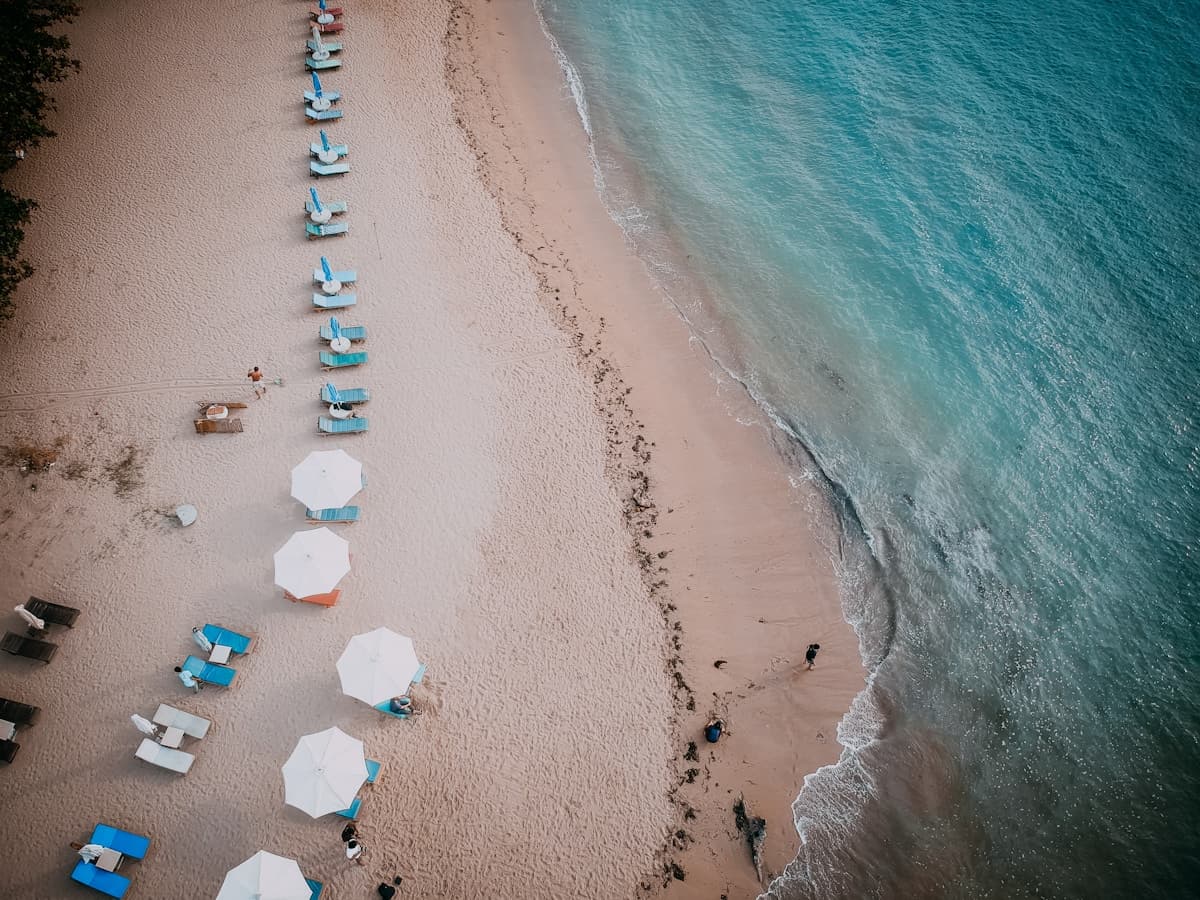
Sanur's east-facing beach and reef-protected water make it less season-dependent than the surf coasts, but the dry season brings the best visibility for the Nusa Penida ferry crossing.
Dry season — April to October
Calm seas, clear visibility, and the best conditions for the Nusa Penida and Nusa Lembongan crossings. Sanur never gets as crowded as Kuta or Seminyak in peak season — July–August here is still manageable. Book ahead for the popular guesthouses on Jalan Danau Tamblingan.
Wet season — November to March
Short afternoon downpours; the beach and promenade stay usable all morning. The ferry crossings to Nusa Penida can be rougher in December–January — check sea conditions before booking. Prices drop 20–30% and long-stay villa rates are very negotiable.
Sweet spot
May–June and September–October: calm seas for island-hopping, dry mornings for the sunrise promenade walk, and none of the July–August pressure.
Local notes
- Sanur's beach faces east — sunrises are spectacular, sunsets are inland. For west-facing sunsets, walk to the promenade bar terraces or drive to Kuta (20 min).
- The reef that keeps the water calm also exposes large flat rocks at low tide — check the tide before swimming with young children.
- Sanur has a large long-stay expat community and several international schools — it is the most 'residential' of the south Bali beach areas, which makes it quieter but also means fewer late-night restaurant options.
Money & practical tips for Sanur
Ferry booking
Book Nusa Penida and Lembongan fast boats the day before through your hotel or directly at the Matahari Terbit pier. In high season (July–August) the early departures sell out. Tickets are IDR 200–350k (USD 12–22) each way — compare two or three operators at the pier, as prices and boat quality vary.
Getting around Sanur
The promenade is walkable end-to-end in under an hour. For the rest of south Bali, Grab and Gojek work reliably from Sanur — journey times to Kuta (20 min), Seminyak (30 min) and the airport (25 min) are among the most predictable in the south. Bicycle rental (IDR 50–80k/day) is available along the promenade and works well for the flat Sanur streets.
Sindhu Market timing
The Sindhu Morning Market (Pasar Sindhu) opens at 4 am and winds down by 8 am — arrival before 7 am gives you the best produce and the most atmosphere. The Night Market on the same site runs from 6 pm and is easier for most travellers.
Where to stay in Sanur
Sanur's accommodation runs along two parallel corridors — the beachfront promenade and Jalan Danau Tamblingan one block inland. The promenade is quieter and closer to the water; Tamblingan has more restaurants and is easier to reach by Grab. Both are walkable to everything Sanur offers.
Budget
Under USD 35 / nightJalan Danau Tamblingan (south end)
The most affordable stretch of Sanur's main strip — guesthouses and small family-run hotels with air-con and pools from USD 20/night, 5-min walk to the beach and the Sindhu market.
Jalan Segara Ayu (inland lanes)
Quiet residential side streets behind the main road — basic homestays at the lowest rates in Sanur, very local feel, short bicycle ride to the promenade.
Mid-range
USD 50–150 / nightJalan Danau Tamblingan (central)
The sweet spot of Sanur — boutique hotels and bungalow resorts with pools, walking distance to the best restaurants, market and beach, without beachfront prices.
North Sanur (near Museum Le Mayeur)
Quieter end of the strip with several well-maintained boutique properties, direct promenade access and a 10-min walk south to the main restaurant cluster.
Luxury
USD 200+ / nightSanur beachfront (Jalan Pantai Sindhu)
The handful of larger resort hotels with direct beach access — garden villas opening onto the promenade, pool bars facing the ocean, and the sunrise from your room terrace.
Hyatt Regency / Puri Santrian corridor
The highest-end cluster in Sanur — full resort facilities, multiple pools, spa and private beach sections; the closest Sanur comes to a Nusa Dua resort experience.
Sanur FAQ
?Is Sanur good for families?
It is one of the best areas in Bali for families — the water is calm and reef-protected, the promenade is flat and safe for cycling and walking, and the overall pace is relaxed without the nightlife noise of Kuta. Waterbom in Kuta is 20 minutes away for a day trip.
?Can I get a ferry to Nusa Penida from Sanur?
Yes — Sanur's Matahari Terbit pier is the most popular departure point for Nusa Penida fast boats (45 min, ~USD 20–25 return) and Nusa Lembongan (30 min, ~USD 20 return). Boats run from about 7 am; book the day before in high season.
?How is Sanur different from Seminyak?
Sanur is quieter, cheaper and more family-oriented; Seminyak is livelier, more upscale and better for beach clubs and nightlife. Sanur's beach faces east for sunrise; Seminyak faces west for sunset. Many itineraries split a few nights between both to get both experiences.
?Is Sanur good for long stays?
Very — it has Bali's most established long-stay infrastructure: international schools, expat clinics, a wide range of restaurants, a proper supermarket (Pepito), and villa rental rates that drop sharply for monthly bookings. The calm, walkable pace suits remote workers and families on extended stays.