A brief history of Nusa Penida
Nusa Penida was for most of its history a place of exile and fear. The island was used by the Klungkung kingdom on the Balinese mainland as a penal colony — criminals, debtors and political enemies were sent across the strait and left to survive on the dry limestone plateau. The island's association with punishment and dark spirits became embedded in Balinese cosmology: Nusa Penida is the home of the demon Jero Gede Mecaling, a fanged giant said to cross the strait to Bali to spread plague and misfortune. The island's temples — including Goa Giri Putri and Pura Dalem Ped — are considered among the most spiritually powerful in the Balinese Hindu universe, and pilgrims from the mainland still make the crossing specifically to pray at them.
The practical reality of life on Nusa Penida remained hard well into the 20th century. The island has almost no surface water — the limestone rock absorbs rain rather than collecting it — and the cliffs that make the coastline so photogenic made agriculture nearly impossible on the coastal strips. The population clustered in the interior, farming seaweed in the calmer bays and making the crossing to Bali by jukung to trade. Roads were poor, electricity arrived late, and the island remained largely invisible to tourism until the smartphone era made its landscapes shareable.
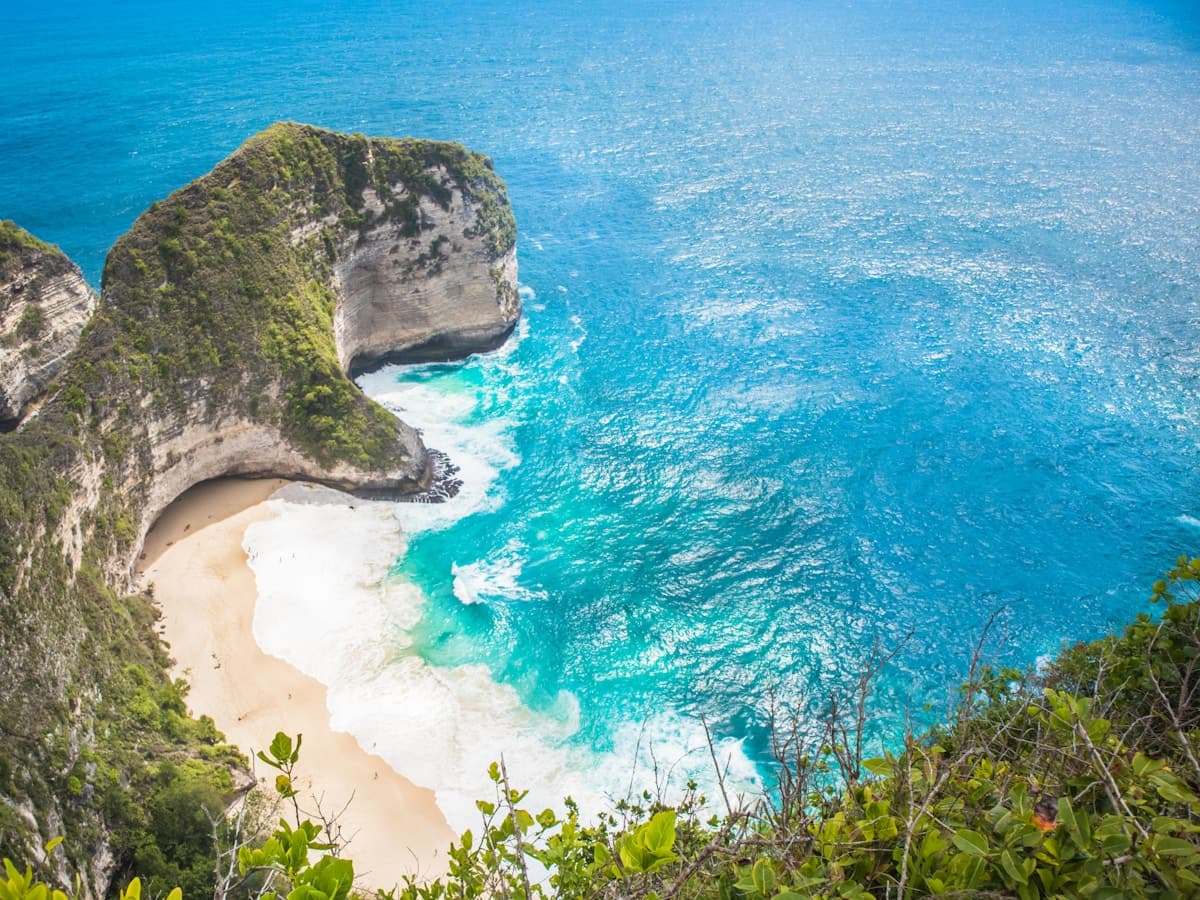
The transformation came with Instagram. Kelingking Beach had been known to a handful of divers and backpackers for years before a photograph of its T-Rex cliff went viral around 2016. Within two years, Nusa Penida had shifted from an obscure diving destination to one of the most searched travel locations in Southeast Asia. Fast boats from Sanur multiplied from a handful to over a hundred daily. Guesthouses and warungs appeared on previously empty clifftops. The island's infrastructure — roads, water, waste management — has struggled to keep pace with the numbers. Nusa Penida in 2026 is caught between two identities: the wild, barely-accessible island it was ten years ago, and the day-trip destination it is becoming. The limestone cliffs have not changed. The crowds beneath them have.
Best time to visit Nusa Penida
Nusa Penida's appeal is partly weather-dependent and partly marine-life seasonal — the island is rewarding year-round but the two best windows serve different purposes.
Dry season — April to October
Calm seas for the boat crossing, best snorkelling visibility at Crystal Bay, and the peak mola mola season (July–October). The island gets crowded in July–August — day-trip boats from Sanur run back-to-back and Kelingking can have queues by 9 am. Aim for May–June or late September for the best balance.
Wet season — November to March
Rougher seas can make the Sanur crossing uncomfortable and occasionally cancel boats altogether. The island is significantly emptier — Kelingking may have fewer than a dozen visitors. Manta rays at Manta Point are present year-round. Roads on the island deteriorate in wet season.
Sweet spot
May–June: calm crossing, good visibility, mola mola season beginning, manageable crowds. Late September–early October: mola mola peak, post-August calm, prices back to normal.
Local notes
- Nusa Penida's roads are steep and potholed — scooter rental is almost mandatory (USD 80–100k/day), but ride cautiously and avoid the road to Kelingking at night.
- Phone signal is patchy in the southwest; download offline maps (Maps.me or Google Maps offline) before leaving the port.
- Sunscreen and reef-safe products matter more here than anywhere else in Bali — the coral reefs at Crystal Bay and Manta Point are under measurable pressure from tourism.
Money & practical tips for Nusa Penida
Getting there
Fast boats depart from Sanur's Matahari Terbit pier (USD 20–25 return, 45 min). Book the day before through your hotel or at the pier — morning departures (7–8 am) sell out in high season. The crossing can be rough; take seasickness tablets if prone.
Getting around
Rent a scooter at Toyapakeh port (IDR 80–100k/day) — it is the only practical way to reach Kelingking, Angel's Billabong and the east coast beaches. The roads are steep and in places unpaved; ride carefully, wear shoes, and avoid the southwest track after dark.
Cash & infrastructure
Nusa Penida has very limited ATMs — bring enough cash from Bali for your entire stay. Mobile data is intermittent. Accommodation and restaurants are basic; the island is not yet equipped for the visitor numbers it receives in peak season.
Where to stay in Nusa Penida
Nusa Penida's accommodation is basic by mainland Bali standards — most guesthouses are family-run, with simple rooms, cold showers and patchy wifi. The trade-off is genuine remoteness, empty viewpoints at dawn, and a fraction of mainland prices. Choose your base by which coast you want to explore.
Budget
Under USD 25 / nightToyapakeh (ferry port, northwest)
The main port town — widest choice of budget guesthouses, easiest arrival and departure, central enough to reach both coasts by scooter. Most day-trippers pass through; overnight guests have the viewpoints to themselves.
Crystal Bay village
A handful of simple homestays right at the bay — fall asleep to the sound of the ocean, wake up and snorkel before the day-trip boats arrive. The most atmospheric budget base on the island.
Mid-range
USD 30–80 / nightSouthwest coast (near Kelingking)
Small guesthouses and simple villas on the clifftop road between Crystal Bay and Kelingking — wake up at the island's most dramatic scenery, reach all three west coast sights without a long scooter ride.
East coast (Pejukutan / Batumadeg)
The quietest, most local part of the island — mid-range villas near Diamond Beach and Atuh Beach, almost no other tourists, genuine village life outside the door.
Luxury
USD 100–250 / nightClifftop villas, west coast
A small number of properly designed villas have appeared on the west coast cliffs — private pools above the ocean, breakfast with an unobstructed horizon view. Nusa Penida's only luxury option, and very limited supply.
Nusa Lembongan (neighbouring island)
If you want a comfortable base for Nusa Penida day trips, Nusa Lembongan's mid-range and boutique hotels are a 15-min boat ride away and far better equipped — a practical compromise between comfort and access.
Nusa Penida FAQ
?Is Nusa Penida worth visiting as a day trip from Bali?
Yes, if you focus on one side of the island. The west coast (Kelingking, Angel's Billabong, Broken Beach) takes a full day including the boat. The east coast (Diamond Beach, Atuh Beach) is a separate day. Trying both coasts in one day is too rushed. Two or three nights lets you see the island properly.
?Can I see manta rays at Nusa Penida?
Yes — Manta Point, around the southern tip of the island, is one of the most reliable manta ray snorkelling sites in Southeast Asia. Boat trips from Crystal Bay run daily (USD 15–25 per person shared). Mantas are present year-round but most consistently seen April–October.
?Is Nusa Penida suitable for children?
Older children (10+) who can snorkel and handle a scooter ride on rough roads can have a great time. The island is not suitable for young children — the roads, the steep cliff sites and the powerful ocean conditions make it genuinely hazardous. Nusa Lembongan, to the northwest, is the calmer, more family-friendly alternative.
?How is Nusa Penida different from Nusa Lembongan?
Nusa Penida is bigger, wilder and less developed — dramatic cliffs, rough roads, basic accommodation. Nusa Lembongan is smaller, calmer and more polished — better roads, nicer restaurants, easier for families. Penida is for adventure and photography; Lembongan is for a relaxed island escape.