A brief history of Jimbaran
Jimbaran has been a fishing bay for as long as anyone in south Bali can remember. The crescent shape of the coastline — open to the west, sheltered by a shallow offshore reef — made it ideal for the traditional jukung outrigger boats that Balinese fishermen have used for centuries. The village of Jimbaran grew up around the beach, its life organized around the daily cycle of fishing: boats out before dawn, catch auctioned at the market by 6 am, fish on the grill by evening. Pura Ulun Siwi, the village's main temple, sits at the crossroads of the old settlement and predates every hotel and restaurant on the bay.
The airport changed everything, though slowly at first. Ngurah Rai International Airport was built on the flat peninsula just north of Jimbaran Bay in the 1960s, and the approach path to the main runway runs directly over the water. For most of the 1970s the proximity of the airport kept resort developers away — the noise and the flight path made the hillside above the bay seem like an unlikely place for a luxury hotel. The Four Seasons changed that calculus when it opened in 1993, building its villas into the cliff terraces above the bay with views that the flight path, paradoxically, made more dramatic rather than less. The sight of a wide-body jet banking low over the fishing boats became part of the Jimbaran aesthetic.
The seafood restaurants came before the resorts and have outlasted every change in the area's fortunes. The first candlelit tables appeared on the sand in the 1970s, when a few warung owners noticed that tourists coming from the airport to Kuta passed through Jimbaran and were hungry. The format — fresh fish displayed on ice, grilled to order, eaten on the beach at sunset — proved so perfectly matched to what visitors wanted that it has barely changed in fifty years. The three main clusters (Kedonganan, the mid-bay strip, and Muaya) have expanded, the prices have risen, and the strolling musicians have multiplied, but the essential experience is unchanged: fish, fire, the last light over the Indian Ocean, and the silhouettes of the boats at anchor in the bay.
Best time to visit Jimbaran
Jimbaran's bay faces west and is sheltered from south swells — the beach is calm year-round, and the seafood dinner works in any season. Dry season gives the clearest sunsets; wet season brings dramatic cloud formations at dusk.
Dry season — April to October
Clear skies for the sunset seafood dinner, calm seas, and the best visibility for swimming. July–August brings more domestic tourists to the seafood strip — tables fill fast, arrive by 5 pm or book ahead.
Wet season — November to March
Short afternoon showers rarely affect the evening seafood scene — rain typically clears by 5 pm. The bay stays calm and swimable. Prices at the hillside resorts drop 25–40%, making this the best window for luxury stays.
Sweet spot
May–June and September: clear sunset skies, calm bay, fewer crowds at the seafood tables than July–August.
Local notes
- Jimbaran is 10 minutes from the airport — the easiest arrival-night base in south Bali if your flight lands late.
- The seafood restaurants quote tourist prices first — always agree on a total price before the fish goes on the grill.
- Airport approach path runs directly over the north end of the bay; planes are visible and audible during landing cycles (roughly every 5 min in peak hours).
Money & practical tips for Jimbaran
Seafood pricing
Most Jimbaran seafood restaurants price by weight. Ask for a full quote before ordering — a transparent restaurant will show you the live price per 100g and confirm the total. Lobster and crab are priced high; fish and prawns are fair value. A full seafood dinner for two with drinks should cost IDR 300–600k at a mid-range place.
Getting around
Jimbaran is small and semi-walkable within the village and beach. For Uluwatu (20 min south), Kuta (15 min north) or the airport (10 min), Grab and Gojek work reliably. Scooter rental (USD 5–8/day) is useful for exploring the Bukit Peninsula.
Airport transfers
Jimbaran is the closest beach area to Ngurah Rai Airport — about 10 minutes by car. Pre-book a transfer for the first arrival or use Grab from the official ride-hail zone at the arrivals exit. Avoid the unofficial taxi touts inside the terminal.
Where to stay in Jimbaran
Jimbaran divides cleanly between the village (affordable, local, inland) and the hillside resort strip (luxury, ocean-view, removed from the fishing-village character that makes the area worth visiting). The village is almost always the better choice unless you specifically want a full resort experience.
Budget
Under USD 45 / nightJimbaran village centre (Jalan Raya Jimbaran)
The original fishing village — small guesthouses and family homestays at low prices, 10-min walk to the beach and the seafood strip, genuine local atmosphere.
Kedonganan village (north bay)
Just north of the fish market — budget rooms above warung restaurants, the earliest access to the morning market, and the least touristic end of the bay.
Mid-range
USD 60–180 / nightJimbaran beachfront lanes
Small hotels and villa guesthouses between the village and the sand — pools, comfortable rooms, 5-min walk to the seafood tables, without the hillside resort price tag.
Muaya Beach area (south bay)
The quietest end of the bay, closest to the most popular seafood cluster — boutique villas and mid-range hotels with easy beach access and good sunset views.
Luxury
USD 350+ / nightFour Seasons / hillside resort corridor
The defining Jimbaran luxury address — cliff-terrace villas above the bay with ocean views, infinity pools and a private beach club at water level; walk down for the seafood dinner, helicopter back up to your villa.
Ayana Resort & Spa
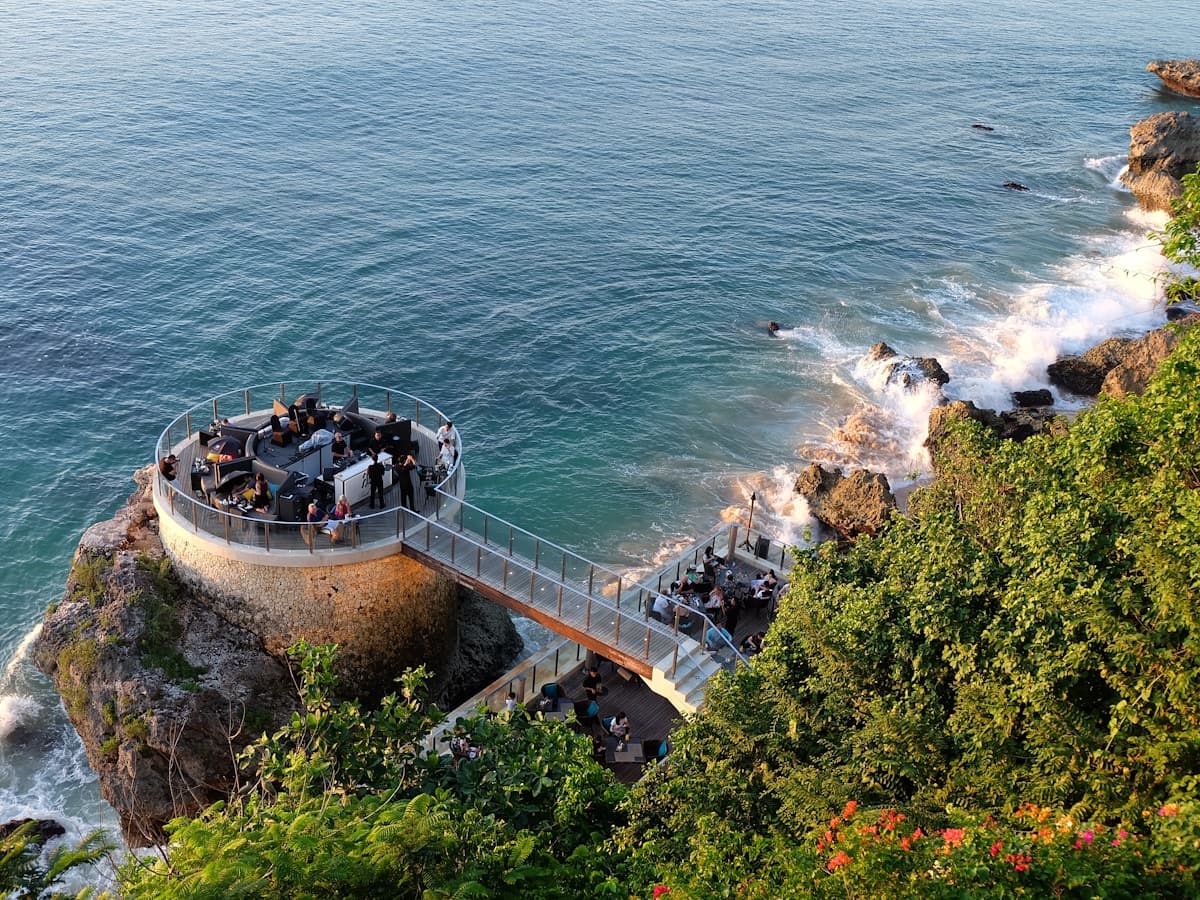
The largest luxury complex in Jimbaran — multiple restaurants, the famous Rock Bar built into the cliff face, and a full spa. The Rock Bar alone makes it worth a visit even if you're not staying.
Jimbaran FAQ
?Which is the best seafood area in Jimbaran Bay?
There are three clusters: Kedonganan in the north (most local, least touristic), Muaya Beach in the south (most famous, most crowded), and a middle stretch near the Four Seasons. Muaya gets the most sunset photographers; Kedonganan offers a quieter table and lower prices for the same quality fish.
?How far is Jimbaran from Uluwatu?
About 20 km by road, 30–40 minutes. Most travellers combine Jimbaran and Uluwatu in one day — Kecak dance at sunset in Uluwatu, then drive north to Jimbaran for a seafood dinner on the beach.
?Is Jimbaran good for a first night in Bali?
It is one of the best options — 10 minutes from the airport, calm bay for a morning swim to recover from the flight, and a sunset seafood dinner that gives an immediate sense of what Bali does well. Check in, swim, eat fish on the beach: a better arrival than Kuta's nightlife strip for most travellers.
?Are there good beaches for children in Jimbaran?
Yes — Jimbaran Bay has the calmest, most child-friendly water in south Bali outside of Nusa Dua. The gentle slope and absence of surf make it genuinely safe for young children. There are no lifeguards, but the bay conditions are consistently mild.