A brief history of Lovina
Lovina is a name invented in the 1950s by a local raja, Panji Tisna, who built the first guesthouse on the north coast and needed something to put on the signboard. The word has no meaning in Balinese or Indonesian — it was simply chosen to sound welcoming to foreign visitors. The coast itself is ancient: the stretch of fishing villages between Singaraja and the western end of the bay has been inhabited continuously since long before Dutch arrival, sustained by the calm sea and productive reef fisheries of the Java Strait.
Singaraja, 10 km east of the beach strip, was the administrative and commercial capital of Bali throughout the Dutch colonial period and into the early years of Indonesian independence. The Dutch chose it precisely because of what makes Lovina attractive today: a sheltered north-facing coast with a natural harbour, protected from the rough Indian Ocean swells that make landing on the south coast difficult. All goods entering and leaving Bali passed through Singaraja until 1953, when the new Ngurah Rai Airport shifted the island's centre of gravity south to Denpasar. The city's colonial warehouses, Chinese merchant quarter, and Gedong Kirtya manuscript library survive as a largely unvisited record of that era.
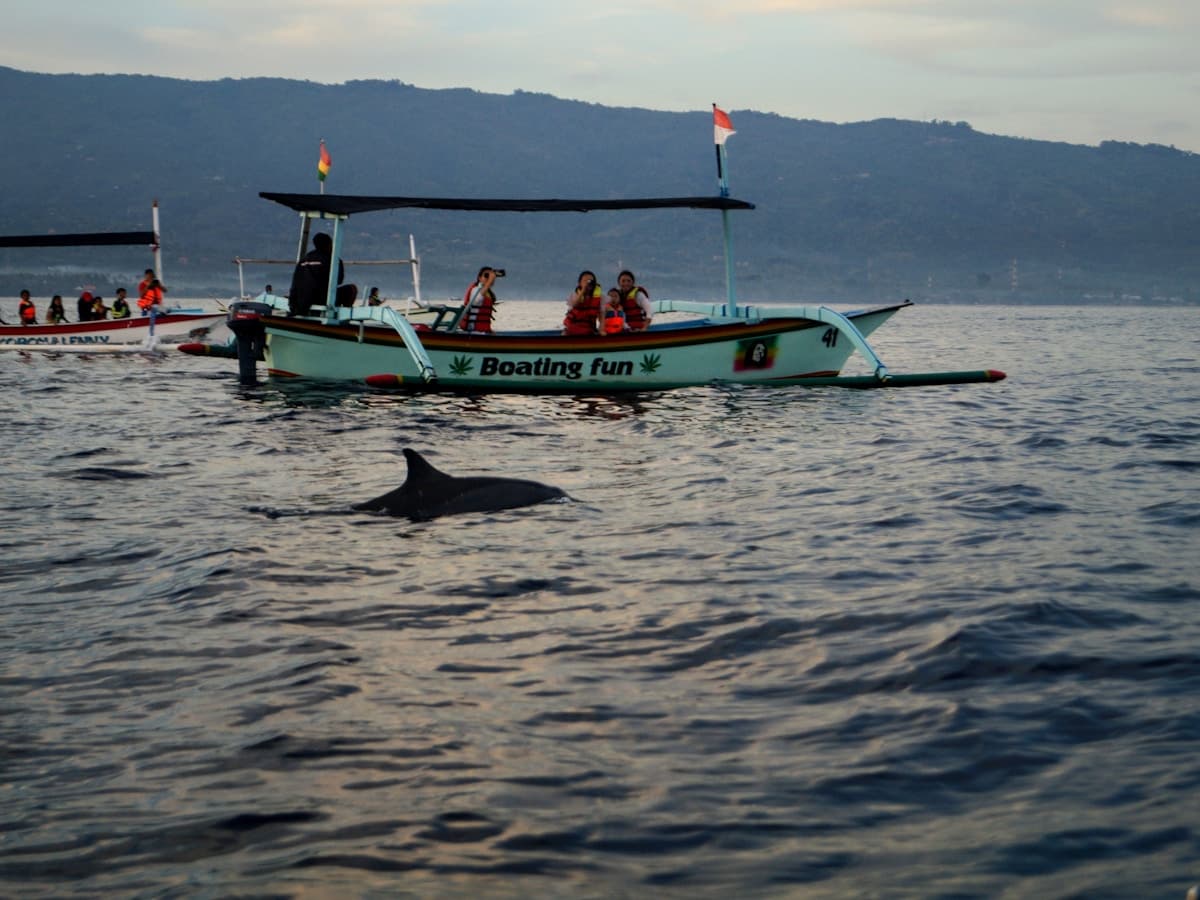
The modern Lovina tourist strip — a loose collection of guesthouses, dive shops, and restaurants along Jalan Raya Lovina — developed slowly and without the investment that built Kuta and Seminyak. It never had the surf that made the south coast famous, and the black volcanic sand was less immediately marketable than the white beaches at Nusa Dua. What it kept was the quiet: the boats still go out before dawn, the fishermen still work the same waters their grandparents did, and the dolphin pods that made Panji Tisna's stretch of coast distinct from every other resort in Bali still appear every morning.
Best time to visit Lovina
Lovina's north-coast position gives it a different climate pattern from the south — it receives less rain in the wet season and has clearer sea conditions in the dry months. Dolphin trips run year-round.
Dry season — April to October
The best time for dolphin trips — calm seas and clear morning visibility. The Java Sea is at its smoothest June to September. Waterfalls at Gitgit run at a moderate but beautiful level. Heat builds by midday; the beach is most enjoyable before 10 am and after 4 pm.
Wet season — November to March
Occasional morning chop on the sea but dolphin trips still depart daily. Rain typically falls in short afternoon bursts rather than all-day downpours. The hills behind Lovina turn intensely green. Gitgit Waterfall is at its most powerful. Fewer tourists — the beach strip is very quiet.
Sweet spot
May–June and September: post-rain green hills, calm seas, dolphin trips reliable, no school-holiday crowds. The north coast rarely gets truly crowded — even the peak months feel quieter than Seminyak on a Tuesday.
Local notes
- Lovina is 80 km from the south coast but 2.5–3 hours by road — the mountain crossing via Bedugul or Kintamani is scenic but slow.
- There are no ATMs on the Lovina beach strip itself — withdraw cash in Singaraja (10 km east) before arriving.
- Dolphin boatmen work the beach every evening to pre-book the next morning's trip. Negotiate the night before rather than on the beach at 5 am.
Money & practical tips for Lovina
Getting there
Lovina is 80 km north of the airport — about 2.5–3 hours by car via the Bedugul mountain road or 3 hours via Kintamani. A private driver is the only practical option; there is no public transport from the south worth using. Coming from Ubud, the drive via Bedugul and Munduk is one of Bali's great highland routes.
Dolphin trip pricing
The going rate for a dolphin boat trip is IDR 150–200k per person. Boatmen on the beach work for the same fleet and the price is largely fixed — bargaining hard is pointless and undercuts local income. Book the evening before, and confirm your departure time (usually 5:30 am).
Cash
There are no ATMs on the Lovina beach strip. The nearest reliable ATM is in Singaraja, 10 km east. Withdraw enough cash for your stay before arrival — most guesthouses, restaurants, and boats are cash only.
Where to stay in Lovina
Lovina's accommodation runs along a 3 km coastal road between the village of Anturan in the east and the main Kalibukbuk beach strip in the centre. There is no high-rise hotel zone — the options are family guesthouses, small hotels with garden pools, and a handful of diving-focused resorts. Budget travellers find good value here; there is nothing at the luxury end of the market.
Budget
USD 15–45 / nightAnturan village
Quiet fishing village east of the main strip with the cheapest guesthouses on the north coast. A 10-min walk or IDR 15k ojek ride to the dolphin boat launch. Most family-run places include breakfast.
Kalibukbuk main strip (back lanes)
The lanes behind the beach road hide basic guesthouses at low prices. You're 2 minutes from the beach and the dolphin boats, with warungs on the doorstep.
Mid-range
USD 45–130 / nightKalibukbuk beachfront
Small hotels directly on the beach strip with pools and sea-view rooms. The dolphin boats depart from the beach in front — no transport needed for the 5:30 am start.
Temukus / west Lovina
Quieter stretch of coast 3 km west of Kalibukbuk with several dive resorts and small boutique hotels. More isolated but with good reef snorkelling just offshore.
Lovina FAQ
?How many days should I spend in Lovina?
Two nights is the right amount — arrive in the afternoon, do the sunrise dolphin trip the next morning, visit Banjar Hot Springs and the Buddhist monastery that day, and depart on the third morning. One night is tight but doable if you prioritise the dolphin trip. Longer stays suit travellers who want to slow down and explore the north coast on a scooter.
?Are the Lovina dolphins guaranteed?
Nothing in wildlife is guaranteed, but the dolphins are present in the offshore waters year-round and show up on the vast majority of mornings. If they are exceptionally far out or the sea is rough, the boatmen will know and will usually tell you honestly the night before. The trip runs regardless of weather in most conditions.
?Is Lovina worth visiting without doing the dolphins?
Yes — the black-sand beach, the hot springs at Banjar, Brahma Arama Vihara, Singaraja's colonial history, and Gitgit Waterfall make a full north Bali day even without the boat trip. But the dolphins are the defining experience and the main reason to stay rather than just day-trip.
?Can I visit Lovina as a day trip from Ubud?
The drive is 2–2.5 hours each way, which makes a day trip possible but very long. You would have to leave Ubud by 5 am to reach Lovina in time for the dolphin trip. A night stay is strongly recommended.