A brief history of Nusa Dua
The peninsula that became Nusa Dua was, until the 1970s, one of the poorest and most isolated corners of south Bali. The name means 'two islands' in Balinese — a reference to two small headlands connected to the mainland by narrow sandbars. The land was dry, scrubby and difficult to farm; the fishing villages of Bualu and Sawangan subsisted largely from the sea. There were no hotels, no roads worth the name, and no reason for outsiders to come. The offshore reef that now attracts resort guests kept the beach calm but also kept the fishing boats in, since launching through the surf was difficult.
Everything changed with a single document. In 1971 the Indonesian government, working with a World Bank feasibility study and the French firm SCETO, designated the peninsula as the site for a purpose-built international tourism enclave. The idea was deliberate and politically motivated: concentrate mass tourism in one controlled zone, collect the foreign exchange, and insulate the rest of Bali's Hindu culture from the disruptions that had already overwhelmed Kuta. The ITDC — Indonesian Tourism Development Corporation — was given authority over a 350-hectare plot. Existing villages were relocated. Roads were built. Electricity and water were piped in. The first resort hotel opened in 1972; by the early 1980s the Bali Hilton, Club Med and a dozen other international brands had taken plots along the new promenade.
The Nusa Dua model was controversial from the start — critics argued that isolating tourism from local communities prevented Balinese people from benefiting directly — but it also largely achieved its goal. The resort zone remains one of the cleanest and most orderly tourist areas in Southeast Asia, and the villages immediately outside the gate, particularly Bualu, developed a prosperous service economy supplying the hotels. Puja Mandala, built in 1997 with five houses of worship on a single plot, was a late addition to the zone and stands as perhaps its most distinctive monument — a government statement about religious tolerance built inside a precinct that was itself an act of government planning.
Best time to visit Nusa Dua
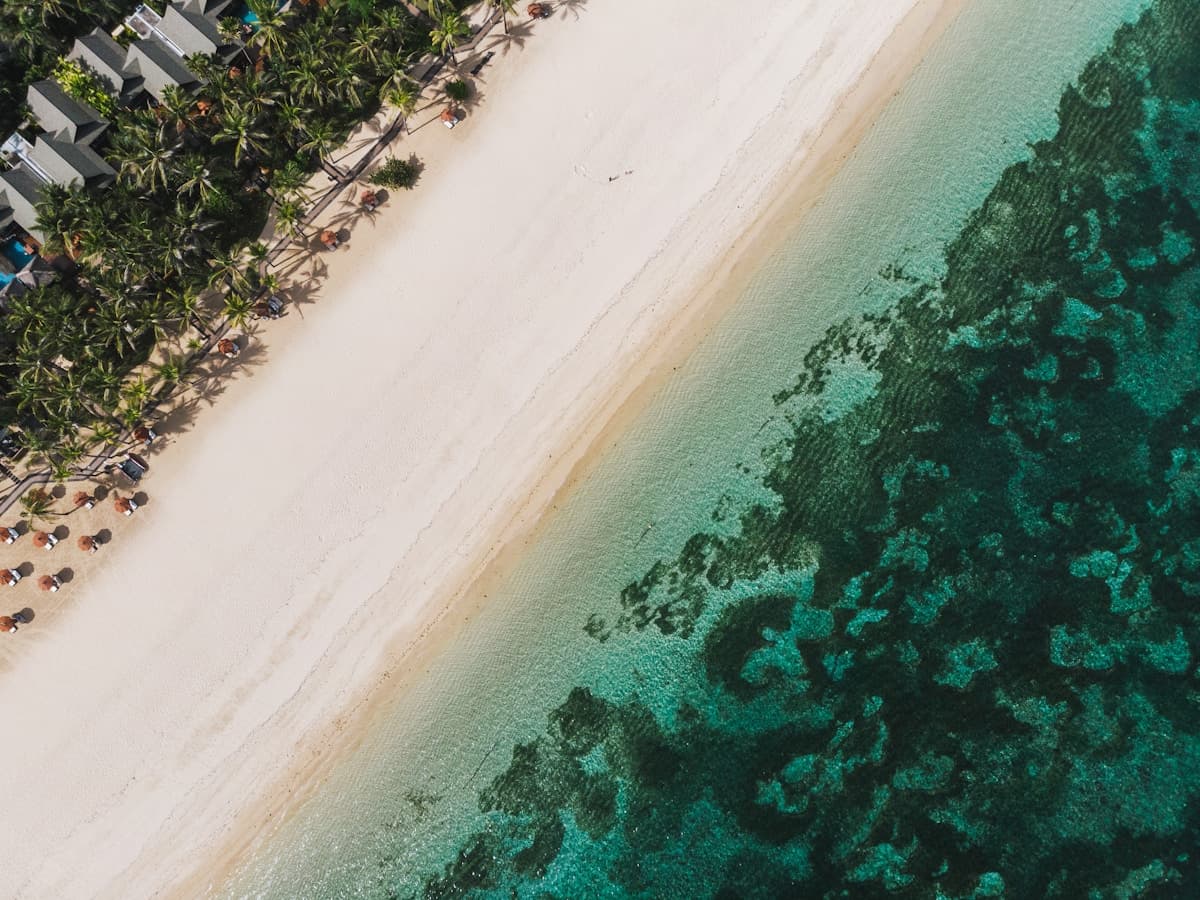
Nusa Dua's offshore reef means the beach is calm and swimmable year-round — unlike the west coast, the wet season here barely affects water conditions. Season matters more for swell-dependent sights like Water Blow.
Dry season — April to October
Sunny mornings, reliable offshore visibility for snorkelling, and the strongest south swells for Water Blow (May–September). July–August fills the resort zone — book 3 months ahead for the big-brand hotels.
Wet season — November to March
Short afternoon showers but the beach stays calm. Water clarity inside the reef is largely unaffected. Hotel rates drop 25–40% and the resort promenade is noticeably quieter. Good window for families who want a relaxed resort stay.
Sweet spot
May–June and September: dry weather, strong swell for Water Blow, manageable resort crowds, and rates below the July–August peak.
Local notes
- Nusa Dua is the most sheltered beach in south Bali — if the surf is rough everywhere else, the lagoon here will still be calm.
- The gated resort zone restricts scooter access — inside the ITDC complex you walk or take hotel shuttles. Rent a scooter if you want to explore Geger Beach and Tanjung Benoa independently.
- Jellyfish appear occasionally in the lagoon, particularly after wet-season rains — ask the hotel beach staff before entering the water.
Money & practical tips for Nusa Dua
Resort zone vs outside
Inside the ITDC gated complex, prices for food and drinks are resort-level (beer IDR 80–120k, meals USD 15–30). Walk or scooter 5 minutes outside the gate to Bualu village for the same meal at a third of the price.
Getting around
The resort promenade is walkable between hotels. For Tanjung Benoa, Geger Beach or Uluwatu day trips, hire a driver (USD 35–50/day) or rent a scooter. Grab and Gojek work at the main gate but may not enter the resort zone — confirm with your hotel.
Water sports pricing
Tanjung Benoa operators quote high to tourists — the opening price for a parasail or banana boat is typically 2–3x the real rate. Package deals (3–5 activities) offer the best value; compare two or three operators before committing.
Where to stay in Nusa Dua
Nusa Dua divides sharply between inside and outside the resort gate. Inside is manicured, expensive and convenient; outside is cheaper, more local and a scooter ride from the beach. Both work well depending on what kind of trip you want.
Budget
Under USD 50 / nightBualu village
The local village immediately outside the ITDC gate — guesthouses and small hotels at a fraction of resort prices, 10-min walk to the beach access road, warungs for cheap meals.
Sawangan (south of the resort zone)
A quieter village near Geger Beach — basic homestays, very local feel, easy scooter access to the beach and the resort promenade.
Mid-range
USD 80–200 / nightITDC resort zone (smaller properties)
Several mid-tier hotels inside the gated complex offer full beach access and the promenade without the price tag of the big five-star brands — book directly for the best rates.
Tanjung Benoa village
The narrow peninsula north of Nusa Dua — mid-range hotels right on the water sports strip, calm water on both sides of the peninsula, and a more local feel than the resort enclave.
Luxury
USD 300+ / nightITDC beachfront (St. Regis, Mulia, Grand Hyatt)
The flagship resort strip — direct beach access, full-scale facilities, some of the largest pools in Bali, and the security and consistency of international brands.
Nusa Dua headland (The Nusa Dua, COMO)
The quieter southern end of the complex near Water Blow — slightly smaller properties with an intimate feel and the dramatic coastal rock scenery that the main beach strip lacks.
Nusa Dua FAQ
?Is Nusa Dua good for families with young children?
It is arguably the best area in Bali for young children. The beach is calm and protected, the resort zone is clean and secure, lifeguards are present, and the pool facilities at the resort hotels are extensive. Waterbom in Kuta is a 20-min drive for older kids.
?Can non-resort guests use Nusa Dua Beach?
Yes — the beach itself is public. Non-guests can access the beach via the public entry points on the coastal road and rent sunbeds from the beach operators. The resort promenade is open to walkers. Only the hotel pools and private beach areas require a room key.
?How far is Nusa Dua from the airport?
About 14 km, 20–30 minutes by car depending on traffic. It is the closest resort area to Ngurah Rai Airport — a straightforward transfer that makes it a popular first and last stop on Bali itineraries.
?Is Nusa Dua good for snorkelling?
The lagoon inside the reef has some coral and fish, but the best snorkelling near Nusa Dua is on a Tanjung Benoa boat trip to the offshore reefs or Turtle Island. For serious snorkelling, Amed or Nusa Penida are significantly better.